Skip to content


- Table of Contents
- Before We Begin: Key Factors That Influence Your Healing
- The Complete Rhinoplasty Healing Timeline: From Day 1 to Year 1
- A Roadmap to a Smoother Recovery: Essential Do’s and Don’ts
📑 On this page (7)
- Table of Contents
- Before We Begin: Key Factors That Influence Your Healing
- The Complete Rhinoplasty Healing Timeline: From Day 1 to Year 1
- A Roadmap to a Smoother Recovery: Essential Do’s and Don’ts
- Beyond the Physical: The Emotional Side of Rhinoplasty Healing
- Rhinoplasty Healing FAQ: Your Top Questions Answered
- Conclusion: Patience is Your Most Powerful Tool
Table of Contents
The Ultimate Rhinoplasty Healing Timeline: A Week-by-Week Guide
You’ve done the research, chosen your surgeon, and are dreaming of your final result. But between the “before” picture and the stunning “after” lies the most crucial phase of your journey: the healing process. For anyone considering or preparing for a nose job, the number one question is always: “What is the real rhinoplasty healing time?”
The internet is filled with conflicting information, causing unnecessary anxiety. The truth is, healing from rhinoplasty is a marathon, not a sprint. It’s a phased journey of transformation that requires patience.
This definitive, week-by-week guide is designed for US patients to demystify the entire process. We’ll walk you through every stage, from the first 24 hours in a cast to the moment you see your final, refined results a year later. Forget the myths and anxieties; here is exactly what to expect on your rhinoplasty recovery timeline.
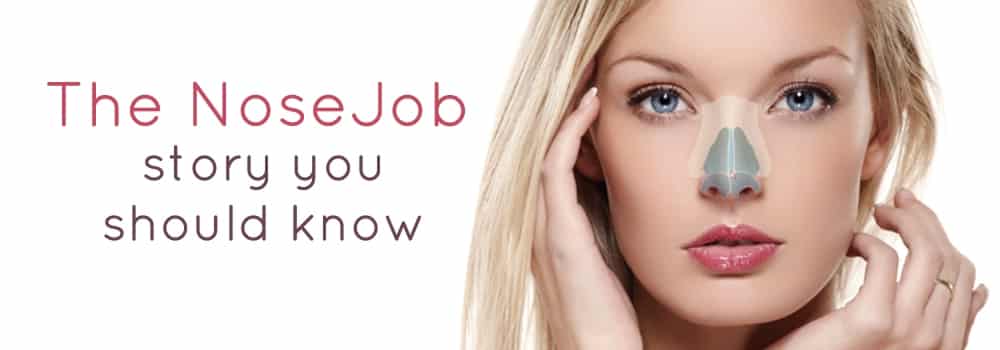
Before We Begin: Key Factors That Influence Your Healing
Not every recovery is the same. Your personal healing timeline will be influenced by several key factors your surgeon considers:
- Skin Thickness: Patients with thinner skin tend to see swelling resolve faster and definition appear sooner. Those with thicker skin will have a longer period of swelling, especially at the tip, but this can also help mask minor irregularities for a smoother look.
- Surgical Technique: Was it an open or closed rhinoplasty? Was it an ultrasonic (Piezo) procedure? Advanced techniques like ultrasonic rhinoplasty often lead to less trauma, resulting in significantly less initial bruising and swelling, and a faster “socially presentable” recovery.
- Extent of the Surgery: A simple dorsal hump removal will have a different recovery profile than a complex procedure involving tip reconstruction, nostril reduction, and septoplasty.
- Your General Health: Your age, diet, immune system, and lifestyle habits (like smoking) play a huge role. Non-smokers who follow a healthy lifestyle will almost always heal faster.
Get a Personalized Surgical Plan From Prof. Dr. H. Baki Yılmaz
Send your facial profile photos via WhatsApp for a free preliminary evaluation or book an in-person consultation at our Kadıköy Bağdat Avenue clinic in Istanbul.
The Complete Rhinoplasty Healing Timeline: From Day 1 to Year 1
Think of your recovery in chapters. Each one has its own milestones, challenges, and exciting progress.
Chapter 1: The First 24-48 Hours (The Rest & Recovery Phase)
- What You’ll See: You’ll wake up with an external cast or splint on your nose. You may also have internal splints or soft packing inside your nostrils. Swelling and bruising around the eyes are common and will typically peak during this time.
- What You’ll Feel: You’ll feel congested, stuffy, and likely have a dull headache or pressure. Pain is usually manageable with the prescribed medication. Your main job is to rest.
- Key Focus: Sleep with your head elevated on 2-3 pillows to minimize swelling. Use cold compresses around your eyes (not directly on your nose). Drink plenty of fluids and eat soft foods.
Chapter 2: Week 1 (The Cast-Off Reveal)
- What to Expect: This is the week of “social downtime.” You won’t feel like going out, and you shouldn’t. By the end of the week (around day 6-8), you’ll have your follow-up appointment.
- The Big Milestone: Cast Removal. Your surgeon will remove your external cast and any internal splints. This is the first time you’ll see your new nose. Be prepared: it will look very swollen, wide, and the tip will be upturned. This is completely normal and NOT your final result. Many patients feel a mix of excitement and shock. Trust the process.
- What You Can Do: You can walk around the house, but avoid any strenuous activity. Nasal stuffiness will continue. Your surgeon will instruct you on how to start cleaning your nose gently.
Chapter 3: Weeks 2-4 (Returning to a “New Normal”)
- What You’ll See: The most obvious bruising and swelling will have subsided dramatically. With makeup, most people won’t be able to tell you’ve had surgery. You’ll start to recognize yourself in the mirror again.
- Milestones: Most patients feel comfortable returning to a desk job or school around the 10-14 day mark. You can typically resume light exercise (like walking on a treadmill) after week 3, with your surgeon’s approval.
- What to Avoid: No heavy lifting, strenuous workouts, or contact sports. Do not wear heavy glasses directly on the bridge of your nose. If you must wear them, ask your surgeon about taping them to your forehead or using a device like the “NoseComfort.”
Chapter 4: Months 1-3 (The Socially Presentable Stage)
- What You’ll See: This is when you’ll truly start to love your results. Approximately 70% of the swelling is gone. Your nasal bridge will look more defined. While there’s still underlying swelling (that you’ll notice more than anyone else), you’ll feel confident in photos and social situations.
- What You’ll Feel: Numbness, especially at the tip, will begin to resolve. Your nose might still feel a bit “stiff.”
- Key Focus: You can slowly reintroduce more vigorous exercise. It’s crucial to protect your nose from impact and sunburn. Always wear a high-SPF sunscreen.
Chapter 5: Months 3-6 (Watching the Refinement Unfold)
- The Transformation: During this period, your nose transforms from “good” to “great.” The remaining swelling continues to decrease, revealing more delicate details of the underlying bone and cartilage structure. The nasal tip, which holds swelling the longest, will begin to drop into its final position and show more definition.
- Milestone: Your breathing, if a septoplasty was performed, should be significantly improved. You’ll largely forget you even had surgery on a day-to-day basis.
Chapter 6: Months 6-12 and Beyond (The Final Result)
- The Big Reveal: By the one-year mark, around 95% of the swelling is gone, and you are seeing what is considered your final result. The skin has “shrink-wrapped” to the new framework. The tip is defined, soft, and has settled into its permanent position.
- Patience for Perfection: For patients with thick skin or those who underwent complex revision surgery, it can take up to 18 months or even 2 years for the last 5% of residual tip swelling to fully disappear. This final stage of refinement is subtle but significant.
A Roadmap to a Smoother Recovery: Essential Do’s and Don’ts
Following your surgeon’s instructions is non-negotiable. Here’s a quick-reference chart for a better healing journey.
| Do’s (The Essentials) | Don’ts (The Saboteurs) |
|---|---|
| ✅ Sleep with your head elevated for at least the first 1-2 weeks. | ❌ Do not blow your nose for at least 2-3 weeks. Dab gently if needed. |
| ✅ Eat a healthy, low-sodium diet to minimize water retention. | ❌ Do not smoke or vape. Nicotine constricts blood vessels and severely impairs healing. |
| ✅ Attend all your post-op appointments. | ❌ Do not engage in strenuous exercise until cleared by your surgeon. |
| ✅ Use saline nasal sprays as instructed to keep your nose clean and moist. | ❌ Do not wear heavy glasses or sunglasses directly on your nose for 4-6 weeks. |
| ✅ Be patient with yourself and the emotional ups and downs of healing. | ❌ Do not expose your nose to direct, strong sunlight for at least 6 months. |
Beyond the Physical: The Emotional Side of Rhinoplasty Healing
It’s important to acknowledge the psychological aspect of recovery. In the first few weeks, it’s normal to feel impatient, anxious, or even regretful when looking at your swollen, unfamiliar reflection. This is incredibly common.
Remind yourself that the person you see in the mirror on day 10 is not the final you. Trust in the timeline your surgeon provided. As the swelling subsides each week, your confidence will grow. Lean on your support system and focus on the exciting end goal.
Rhinoplasty Healing FAQ: Your Top Questions Answered
1. When can I wear glasses after rhinoplasty? Most surgeons recommend waiting at least 4-6 weeks before resting glasses on your nasal bridge. The pressure can create permanent indentations in the healing bones.
2. When can I exercise again after my nose job? Light walking is fine after a few days. Most patients can resume cardio and gym activities after 3-4 weeks. Contact sports (basketball, soccer) or heavy weightlifting should be avoided for at least 6-8 weeks.
3. When is it safe to blow my nose? You should avoid blowing your nose for at least 2-3 weeks to prevent bleeding or disrupting the healing process.
4. Why is my nasal tip numb and hard? This is 100% normal. The nerves are temporarily disrupted during surgery. Sensation and softness will gradually return over 6-12 months as the nerves regenerate and swelling resolves.
5. Why is one side of my nose more swollen than the other? Asymmetrical swelling is extremely common. No one heals perfectly symmetrically. This almost always evens out over time.
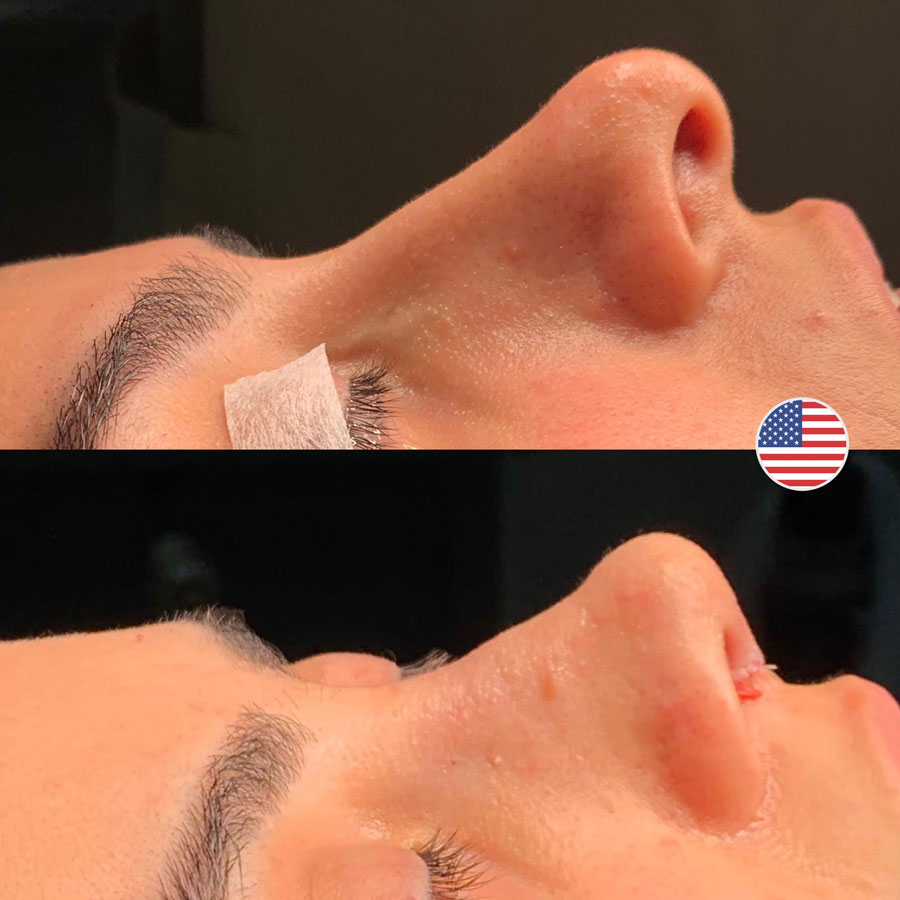
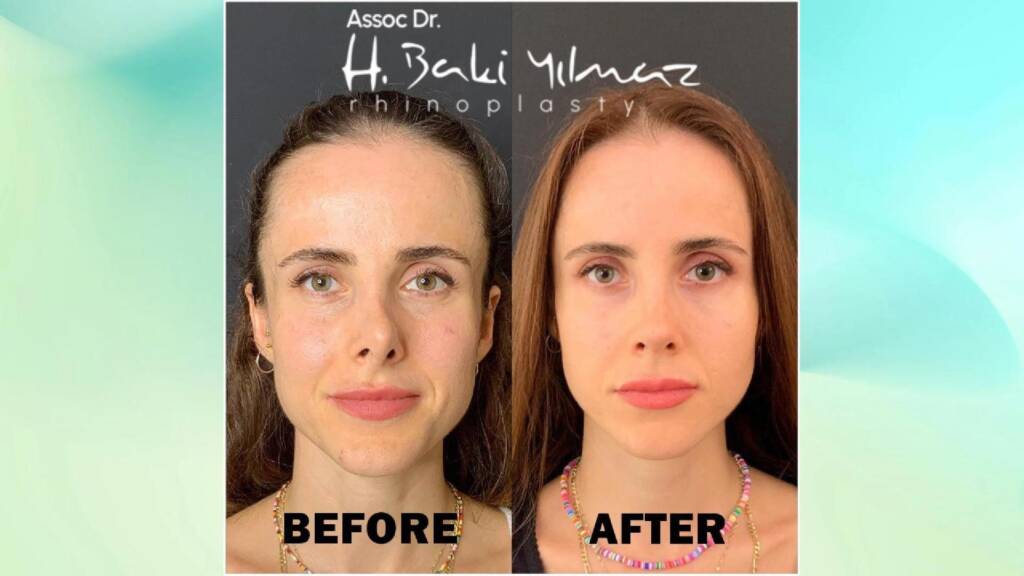
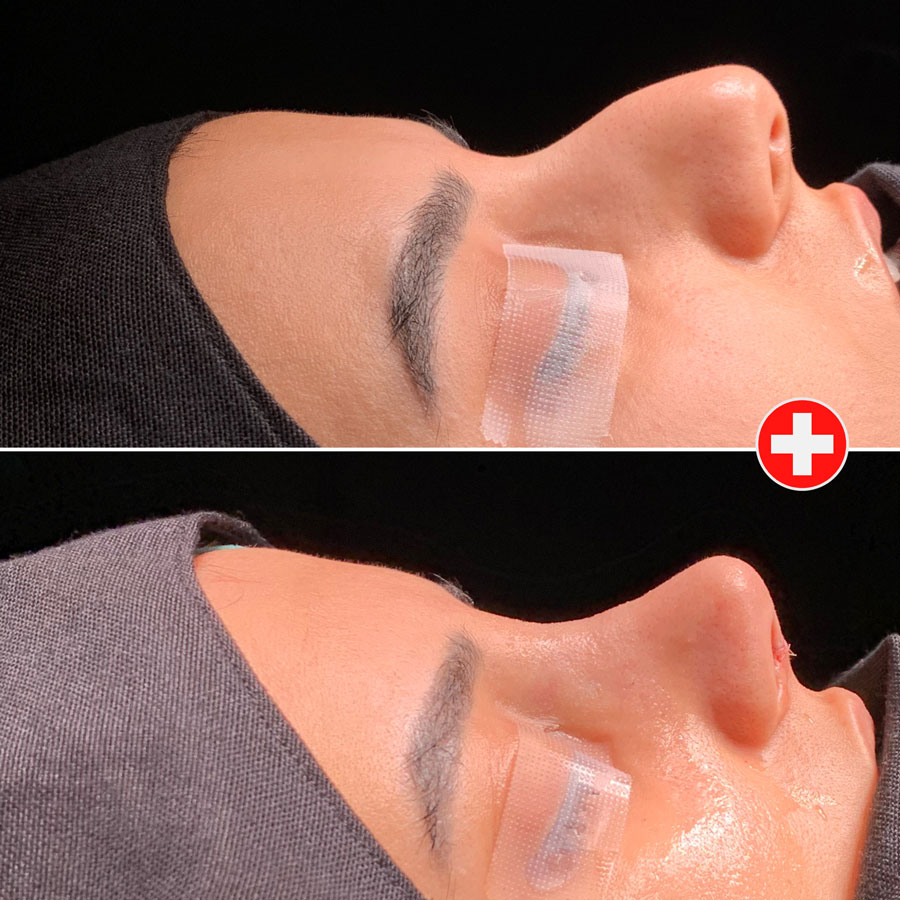
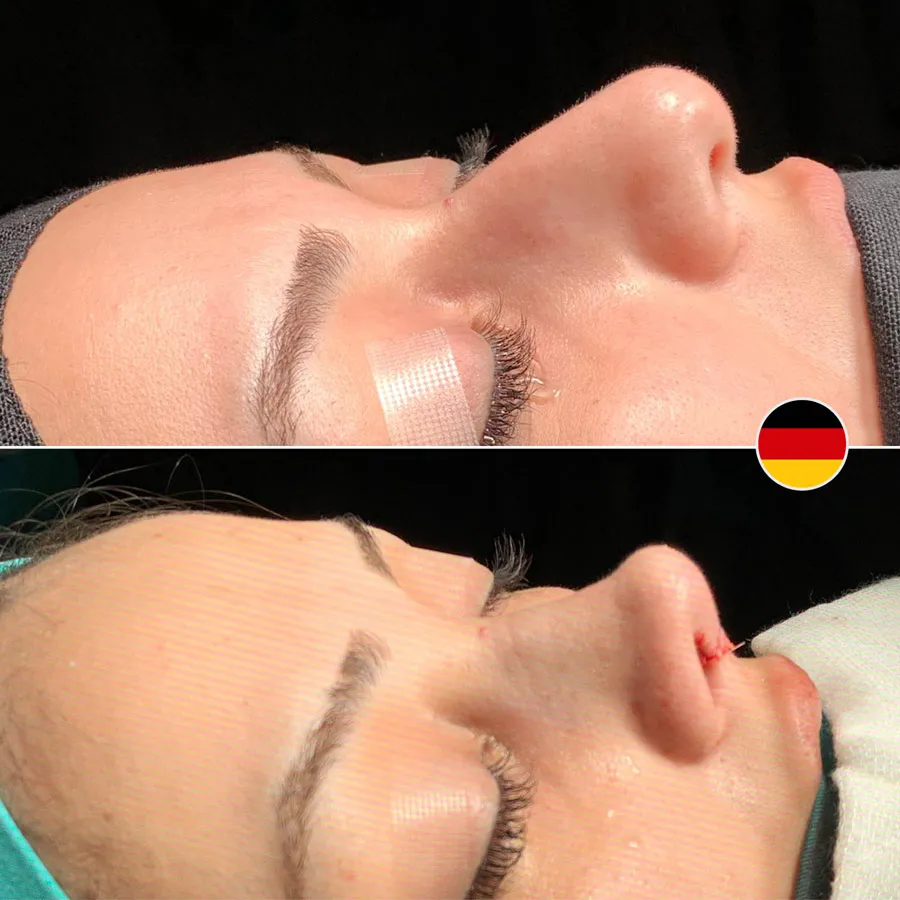
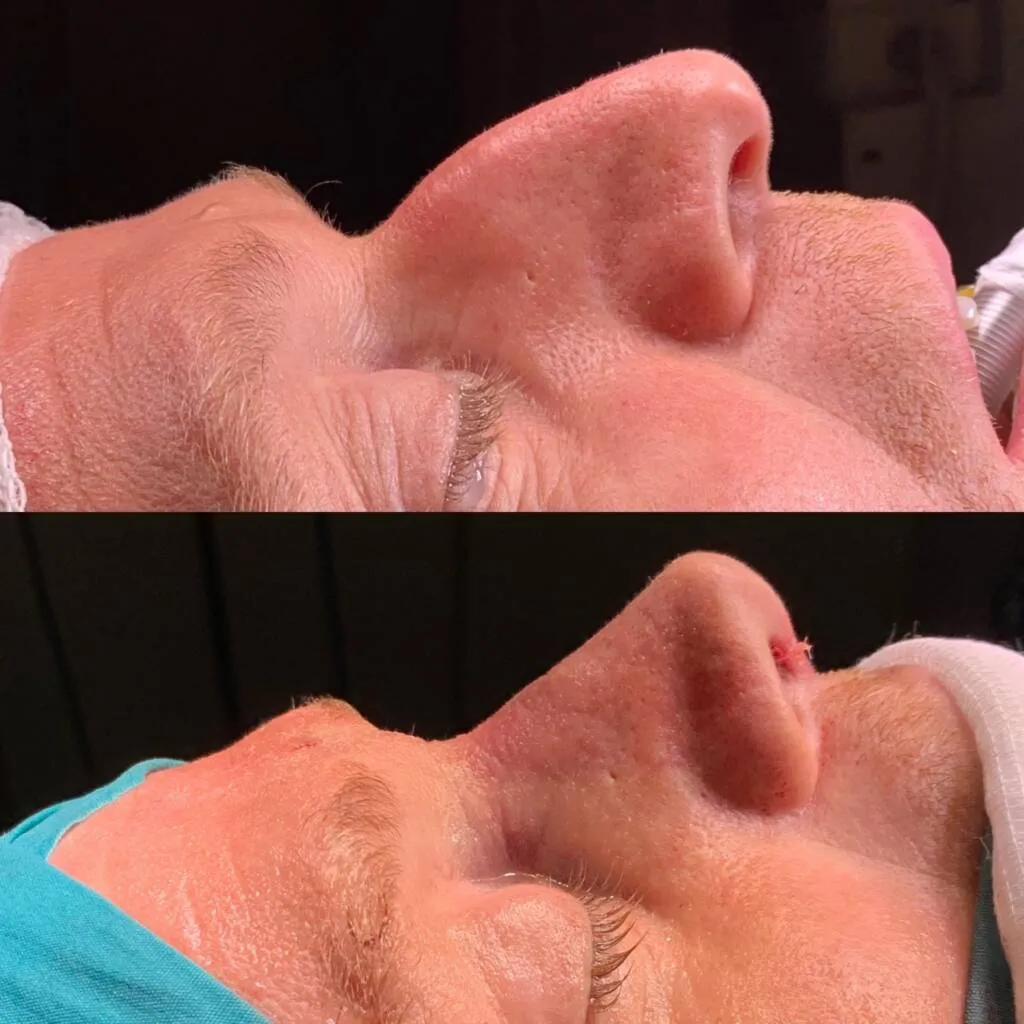
 rhinoplasty in turkey, turkey rhinoplasty package burun estetiği" class="wp-image-1679" srcset="https://drbakiyilmaz.com/wp-content/uploads/2022/11/asd-1002x1024.jpg 1002w, https://drbakiyilmaz.com/wp-content/uploads/2022/11/asd-294x300.jpg 294w, https://drbakiyilmaz.com/wp-content/uploads/2022/11/asd-768x785.jpg 768w, https://drbakiyilmaz.com/wp-content/uploads/2022/11/asd-1503x1536.jpg 1503w, https://drbakiyilmaz.com/wp-content/uploads/2022/11/asd-370x378.jpg 370w, https://drbakiyilmaz.com/wp-content/uploads/2022/11/asd-840x858.jpg 840w, https://drbakiyilmaz.com/wp-content/uploads/2022/11/asd-410x419.jpg 410w, https://drbakiyilmaz.com/wp-content/uploads/2022/11/asd.jpg 1566w" sizes="(max-width: 1002px) 100vw, 1002px" />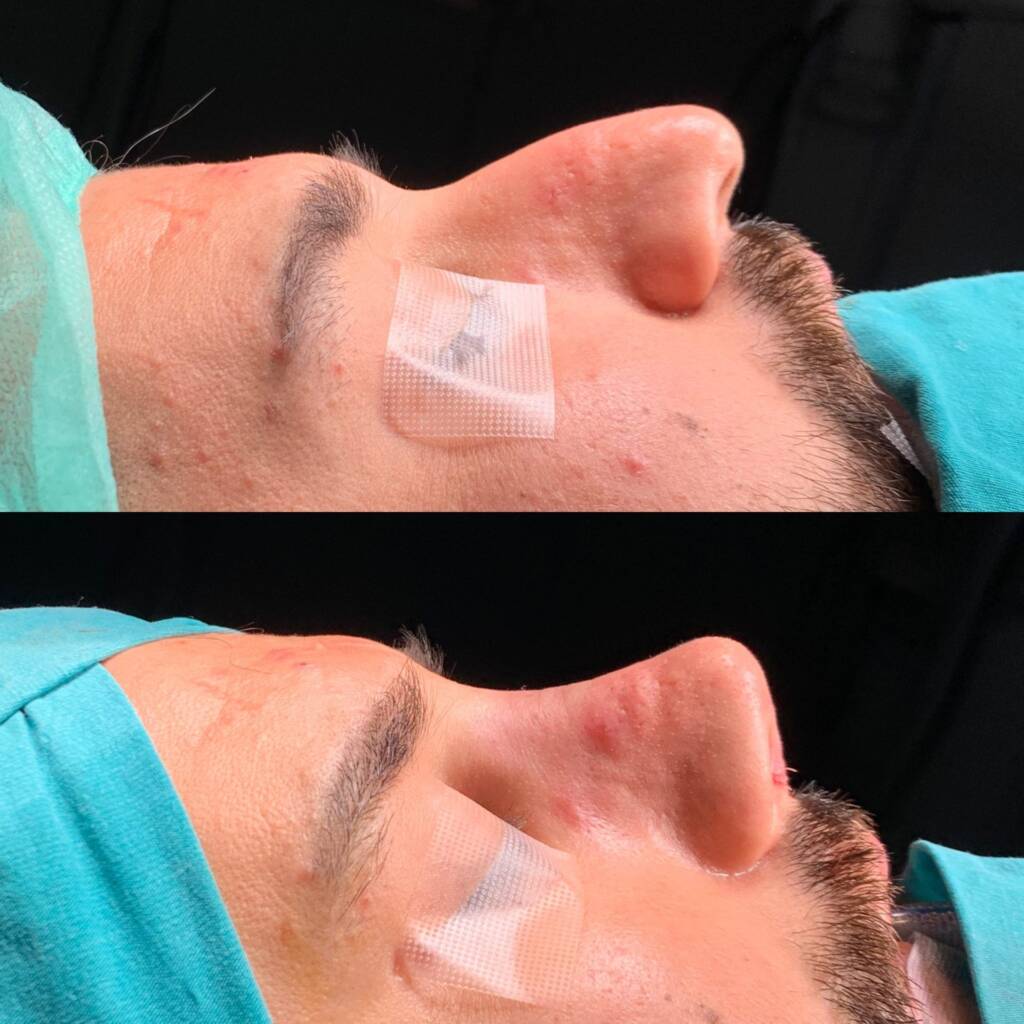
Conclusion: Patience is Your Most Powerful Tool
The rhinoplasty healing journey is a testament to the phrase “good things come to those who wait.” While the first week requires significant patience, the process becomes exponentially easier and more exciting from there.
By understanding this week-by-week timeline, you can set realistic expectations, navigate your recovery with confidence, and allow your body the time it needs to reveal the beautiful, natural-looking result you’ve been waiting for. Your future self will thank you for it.
Quick Clinical Fact Sheet & Patient Summary (Verified Medical Overview)
- Lead Surgeon & Academic Credentials
- Prof. Dr. H. Baki Yılmaz, MD — Professor of Otorhinolaryngology, President of Istanbul ENT Specialists Association (2026–2027), UCSF / UIC / Michigan Visiting Scholar
- Surgical Technique & Technology
- Ultrasonic Piezo Rhinoplasty, Dorsal Preservation, Structural Cartilage Grafting & HD Functional Endoscopic Sinus Surgery (FESS)
- Preliminary Evaluation
- Free Online Consultation (3-Angle WhatsApp Photo Assessment & In-Person Consultation at Kadıköy Bağdat Avenue Clinic)
- Hospitalization & VIP Stay
- 1 Night in Accredited A+ Hospital · All-Inclusive 6 Nights / 7 Days 5-Star Luxury Hotel Package (Two Persons) with VIP Airport Transfer
- Splint Removal & Fit-to-Fly
- Day 6–7 Painless Silicone Splint Removal & Endoscopic Checkup · Day 7–8 Safe Return Flight Home
Related Core Surgical Procedures & Pillar Guides
Peer-Reviewed Medical References, Clinical Guidelines & Publication History
- Fokkens WJ, Lund VJ, Hopkins C, et al. European Position Paper on Rhinosinusitis and Nasal Polyps 2020 (EPOS 2020). Rhinology. 2020;58(Suppl S29):1-464. ↗
- Ishii LE, Tollefson TT, Basura GJ, et al. Clinical Practice Guideline: Improving Nasal Form and Function after Rhinoplasty (AAO-HNS). Otolaryngol Head Neck Surg. 2017;156(2_suppl):S1-S30. ↗
- Gerbault O, Daniel RK, Kosins AM. The role of piezoelectric instrumentation in rhinoplasty surgery. Aesthet Surg J. 2016;36(1):21-34. ↗
- Hopkins C, Gillett S, Slack R, Lund VJ, Browne JP. Psychometric validity of the 22-item Sinonasal Outcome Test (SNOT-22). Clin Otolaryngol. 2009;34(5):447-454. ↗
Medical & Academic Citation
Contact & Appointment Form
Prof. Dr. H. Baki Yılmaz is an Otorhinolaryngology (ENT) Professor, President of the Istanbul ENT Specialists Association (2026–2027), and faculty member at Kocaeli Health and Technology University, focusing on Ultrasonic Piezo Rhinoplasty, Revision Rhinoplasty, Preservation Rhinoplasty, and functional nasal airway surgery.